


Dubai is preparing for one of its most significant environmental regulatory shifts to date. From January 1, 2026, the emirate will enforce a major ban on single-use plastics, reshaping how businesses operate across retail, food & beverage, logistics, and e-commerce.
This move represents the final phase of a plastic phase-out strategy announced in 2023, reinforcing Dubai’s long-term sustainability and ESG agenda — and placing new compliance obligations on companies operating in the UAE.
For businesses, this is not just an environmental update. It is a regulatory, operational, and cost-management issue that requires early planning.
What Is Changing in 2026?
From January 1, 2026, Dubai will prohibit the use of several single-use plastic items, especially in takeaway, delivery, and food service operations.
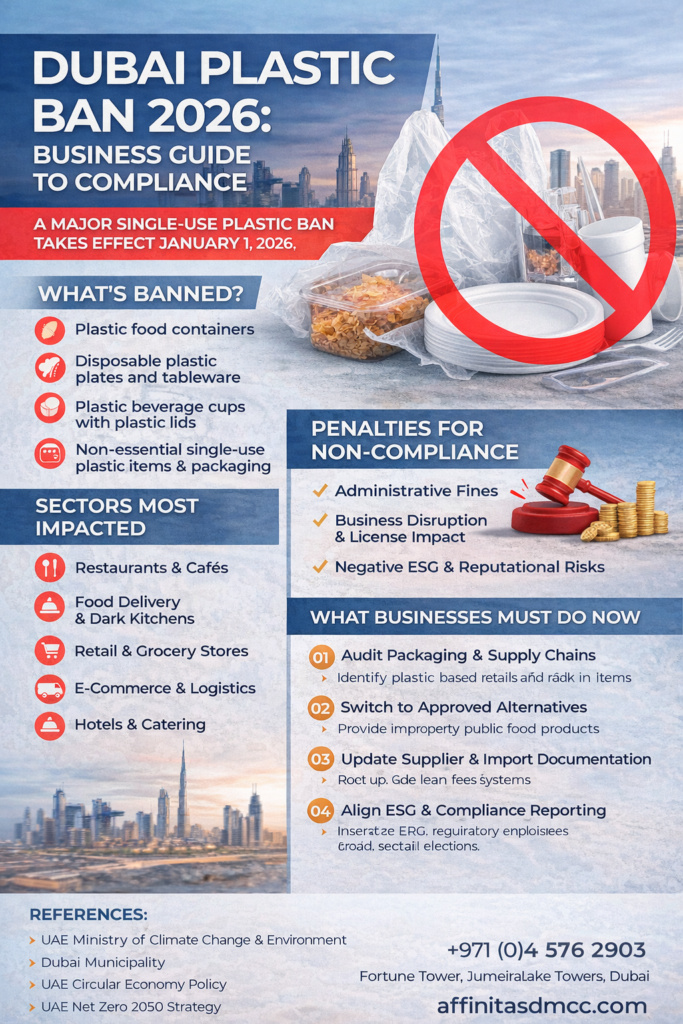
Items Banned Under the 2026 Plastic Regulation
- Plastic food containers
- Disposable plastic plates and tableware
- Plastic beverage cups with plastic lids
- Certain plastic packaging used in food delivery
- Non-essential single-use plastic service items
This marks the final stage of Dubai’s plastic reduction roadmap, following earlier restrictions on plastic bags and selected packaging materials.
Which Businesses Are Most Affected?
The impact will be felt across multiple sectors:
- Restaurants & cafés
- Food delivery platforms
- Cloud kitchens
- Retail & supermarkets
- Hotels & catering services
- E-commerce and logistics providers
- Importers of packaging materials
Companies operating in Free Zones, Mainland, and Offshore structures are all subject to environmental compliance obligations under UAE regulations.
Penalties & Compliance Risks
While final penalty schedules are expected to be clarified closer to implementation, businesses should anticipate:
- Administrative fines
- License compliance issues
- Operational disruptions
- Negative ESG and reputational impact
From a regulatory perspective, non-compliance can directly affect trade license renewals, inspections, and broader compliance standing — especially for businesses already subject to VAT, Excise, or Corporate Tax oversight.
Why Dubai Is Enforcing the Plastic Ban
Dubai’s plastic ban aligns with broader national and international objectives:
- UAE Net Zero 2050 Strategy
- Circular economy initiatives
- ESG compliance expectations from global investors
- Reduced environmental liabilities
The UAE is increasingly positioning itself as a regulated, future-ready economy, where sustainability compliance is becoming part of standard corporate governance — not an optional extra.
What Businesses Should Do Now
1. Audit Packaging & Supply Chains
Identify plastic-based materials currently used in:
- Takeaway containers
- Delivery packaging
- Imported food and beverage products
2. Transition to Approved Alternatives
Switch to:
- Paper-based packaging
- Compostable or biodegradable materials
- Reusable container systems (where applicable)
3. Update Supplier & Import Documentation
Ensure suppliers meet UAE sustainability and customs requirements to avoid shipment delays or compliance flags.
4. Align ESG & Compliance Reporting
Environmental compliance increasingly overlaps with:
- Corporate governance
- Investor due diligence
- Banking and financing reviews
How Affinitas FZCO Supports Businesses
At Affinitas FZCO, we help businesses navigate regulatory transitions that affect licensing, compliance, and operational continuity.
Our support includes:
- Business compliance assessments
- Regulatory advisory for UAE environmental policies
- Corporate structuring aligned with ESG standards
- Ongoing compliance and audit readiness
Environmental regulations are no longer isolated issues — they intersect with tax, licensing, reporting, and corporate governance.
Authority & Regulatory References
- UAE Ministry of Climate Change & Environment
- Dubai Municipality sustainability initiatives
- UAE Circular Economy Policy
- UAE Net Zero by 2050 Strategy
Final Thought
Dubai’s 2026 plastic ban is not just about sustainability — it’s a clear signal of regulatory maturity. Businesses that adapt early will benefit from smoother compliance, stronger ESG positioning, and long-term operational stability.
Those that delay risk penalties, supply disruptions, and regulatory pressure.