


By Affinitas DMCC — Redomiciliation, Corporate Structuring & Tax Advisory Experts
Why Companies Are Redomiciling to the UAE
Over the past few years, the UAE has become one of the world’s leading destinations for corporate redomiciliation. Companies from the UK, EU, US, Asia, and offshore jurisdictions are increasingly choosing to migrate their corporate seat to the UAE while maintaining legal continuity.
This trend is driven by a combination of factors:
- Global tax restructuring
- Economic substance requirements
- Need for jurisdictional stability
- Group consolidation
- Access to Middle East, Africa, and Asia markets
- Regulatory predictability
Several UAE Free Zones now allow corporate migration (redomiciliation), making the UAE a strategic base for international companies seeking efficiency, compliance, and long-term growth.

What Is Redomiciliation (Corporate Migration)?
Redomiciliation, also known as corporate migration or continuation, is a legal process that allows a company to transfer its place of incorporation from one jurisdiction to another without creating a new legal entity.
Key characteristics:
- The company remains the same legal entity
- The original incorporation date stays unchanged
- Assets, contracts, and liabilities remain with the company
- The company receives a Certificate of Continuance in the UAE
- The company is deregistered or liquidated in the original jurisdiction (where required)
This makes redomiciliation significantly more efficient than dissolving and re-incorporating.
Why Companies Choose the UAE for Redomiciliation
The UAE offers a rare combination of regulatory flexibility, tax efficiency, and international credibility.
Key Advantages
- Strategic geographic location
- Modern legal framework aligned with OECD standards
- Access to top-tier banking
- Strong Free Zone ecosystem
- Competitive corporate tax regime (9%)
- No personal income tax
- Extensive double tax treaty network
Sources:
Which UAE Free Zones Allow Redomiciliation?
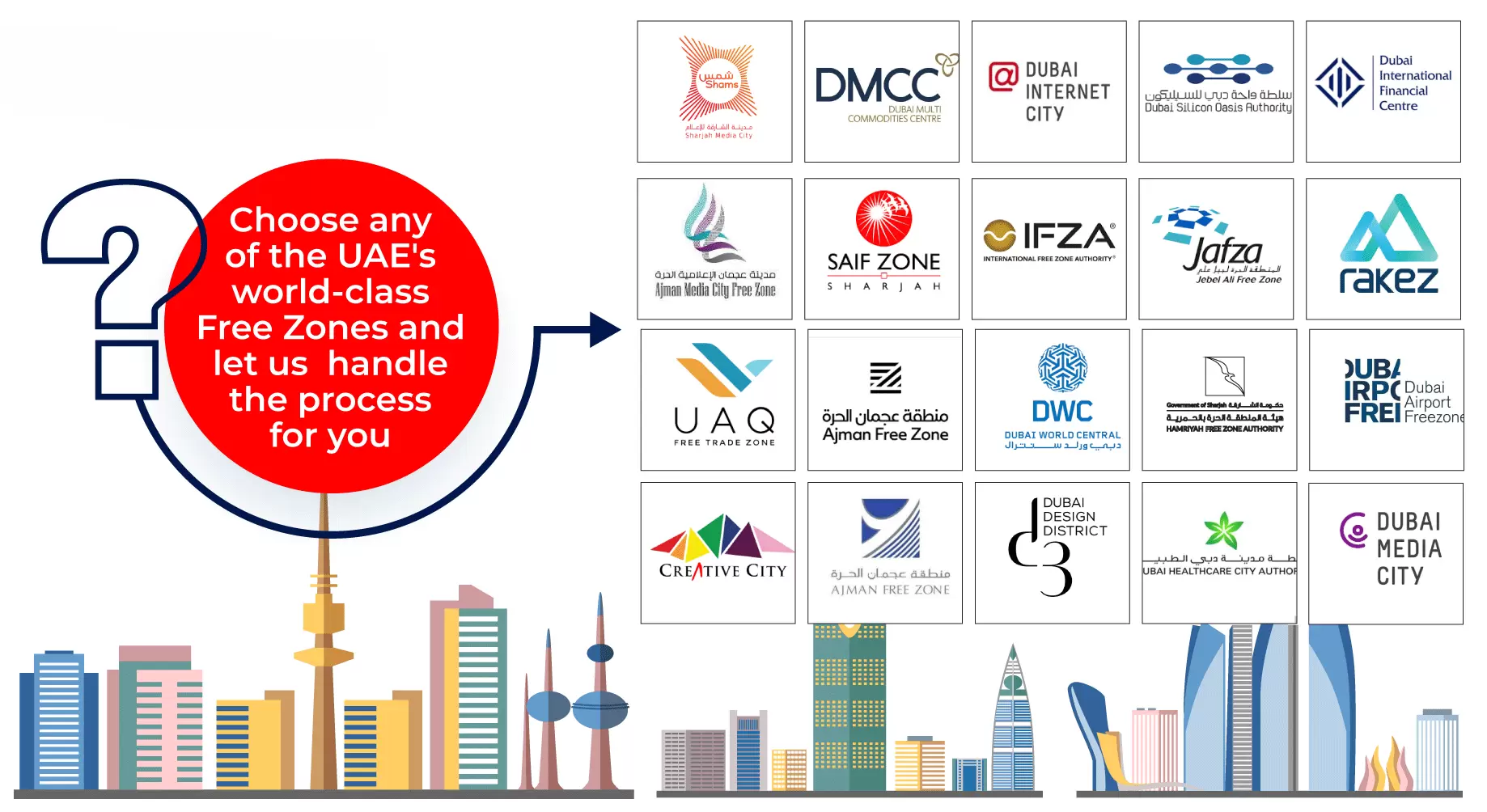
Several UAE Free Zones explicitly permit corporate migration:
| Free Zone | Ideal For |
|---|---|
| ADGM (Abu Dhabi Global Market) | Holding companies, funds, SPVs |
| DIFC (Dubai International Financial Centre) | Financial services, fintech, investment firms |
| DMCC (Dubai Multi Commodities Centre) | Trading, holdings, international groups |
| JAFZA (Jebel Ali Free Zone) | Logistics, manufacturing, trading |
| RAK FTZ / RAK ICC | Holdings, asset protection |
Read more: Redomiciliation Services in Dubai
How to Choose the Right Free Zone
Choosing the correct Free Zone is critical and depends on multiple factors:
Key Considerations
- Permitted business activities
- Whether the company is operational or a holding entity
- Residency requirements for directors or signatories
- Office lease obligations and costs
- Minimum share capital
- Ongoing compliance (audit, filings, substance)
- Whether outbound redomiciliation is allowed in the future
Example:
- A holding company has wide flexibility
- An oil & gas services company has limited Free Zone options
Corporate Tax Considerations After Redomiciliation
A critical 2025 update:
👉 All UAE entities are subject to corporate tax, including redomiciled companies.
Corporate Tax Overview
- 0% on taxable income up to AED 375,000
- 9% above AED 375,000
- 0% only on Qualifying Free Zone Income (if strict conditions are met)
Redomiciliation does not automatically grant tax exemption. Proper structuring is essential.
Read more:
UAE Corporate Tax Advisory
Redomiciliation Process in the UAE (Step-by-Step)
While procedures vary by Free Zone, the standard process includes:
Step 1 — Eligibility Review
- Confirm the current jurisdiction permits outward redomiciliation
- Obtain legal opinion or no-objection letter
Step 2 — Document Preparation
- Constitutional documents
- Shareholder and board resolutions
- Certificates of incumbency
- Financial statements
- Notarisation and attestation (often time-consuming)
Step 3 — Free Zone Initial Approval
- Submission of application
- Activity approval
- Name reservation
Step 4 — Office Lease
- Physical or flexi-desk office (mandatory in most zones)
Step 5 — Continuation Registration
- Signing Articles of Continuation
- Payment of fees
- Issuance of Certificate of Continuance
Step 6 — Deregistration in Original Jurisdiction
- Liquidation or formal deregistration (if required)
⏱ Timeline:
Typically 6–8 weeks, excluding document attestation delays.
Additional Legal & Operational Considerations
Before initiating redomiciliation, companies should conduct full due diligence.
Contracts & Financing
- Review loan agreements
- Check change-of-jurisdiction clauses
- Obtain lender or counterparty consents
Employees
- Visa and work permit requirements
- Transfer or re-employment structures
- End-of-service benefits
Subsidiaries & Branches
- Pre-migration approvals
- Post-migration filings
- Potential reclassification in foreign jurisdictions
⚠ Some jurisdictions treat redomiciliation as a share transfer, triggering transfer taxes.
Redomiciliation vs New Company Setup (Comparison Table)
| Aspect | Redomiciliation | New Incorporation |
|---|---|---|
| Legal continuity | Yes | No |
| Contracts preserved | Yes | No |
| Bank accounts | Often retained | New |
| Incorporation date | Same | New |
| Complexity | Higher | Lower |
| Time | 6–8 weeks | 3–7 days |
Common Mistakes Companies Make When Redomiciling
- Choosing the wrong Free Zone
- Ignoring corporate tax impact
- No review of contracts
- Underestimating compliance costs
- No exit strategy planning
- Assuming Free Zone = tax-free
This is why redomiciliation should always be managed by specialists.
How Affinitas DMCC Supports Corporate Migration
Affinitas DMCC provides end-to-end redomiciliation services, including:
✔ Jurisdiction eligibility analysis
✔ Free Zone selection strategy
✔ Legal coordination & documentation
✔ Corporate tax planning
✔ Qualifying Free Zone Income assessment
✔ Office setup & visas
✔ Banking support
✔ Ongoing compliance & accounting
Read more:
SPV & Holding Structures
FAQs: Corporate Redomiciliation to the UAE
Can any company redomicile to the UAE?
Only if the current jurisdiction allows outward redomiciliation.
Is redomiciliation tax-free?
No. Corporate tax applies unless Qualifying Free Zone conditions are met.
How long does redomiciliation take?
Usually 6–8 weeks after documents are ready.
Can employees move with the company?
Yes, but UAE visas and work permits are required.
Conclusion: Redomiciliation as a Strategic Business Move
Corporate migration to the UAE is not just a legal process — it is a strategic transformation. When done correctly, it allows companies to consolidate operations, align with global tax standards, and position themselves in one of the world’s most dynamic business hubs.
However, redomiciliation requires careful planning, tax structuring, and expert execution.
Speak to a Redomiciliation Expert Today
Launch Your Business In Dubai and the Entire UAE
Get Your Free Consultation with Our Business Consultants!
📞 +971 (0) 4 576 2903
📧 in*******@af***********.com
📍 Fortune Tower, Jumeirah Lake Towers — Dubai
🔗 https://affinitasdmcc.com/contact/