


A landmark cabinet decision signals a fundamental shift in how the UAE intends to grow its economy — and it opens concrete opportunities for businesses that position themselves correctly, right now.
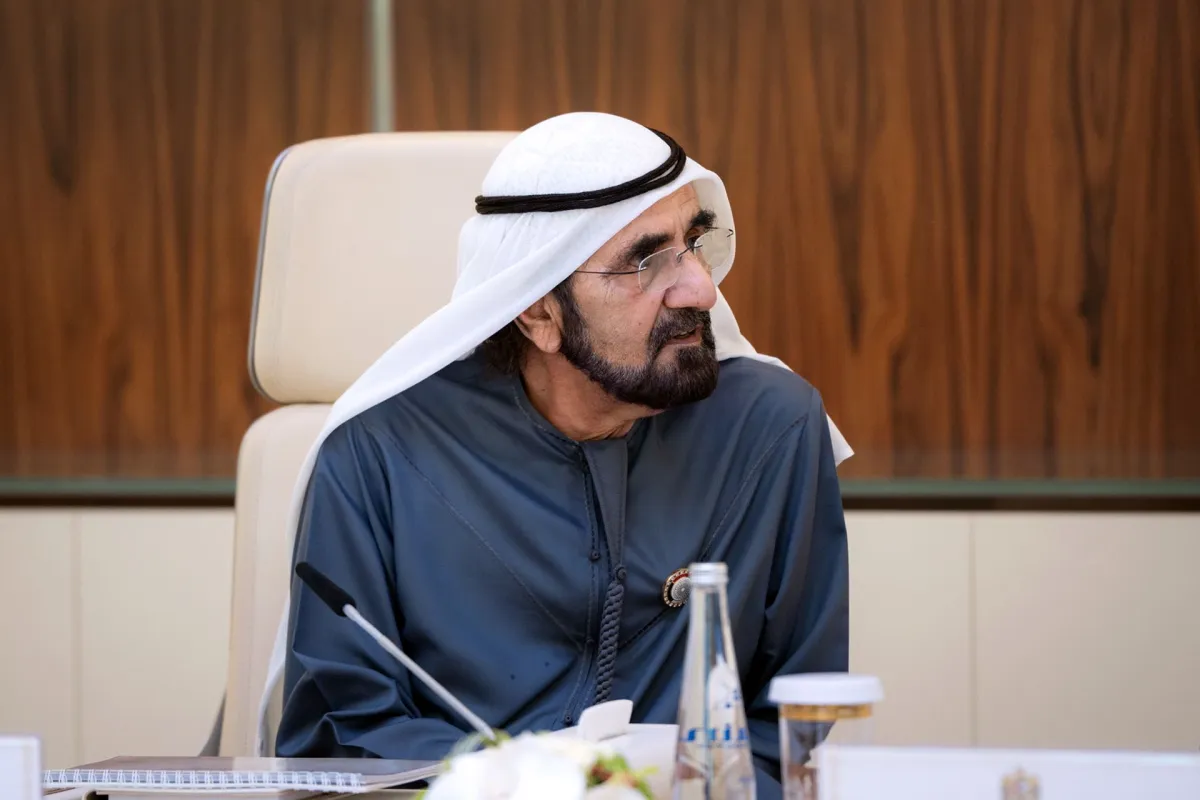
On 26 April 2026, His Highness Sheikh Mohammed bin Rashid Al Maktoum, Vice President, Prime Minister and Ruler of Dubai, chaired a UAE Cabinet meeting that produced one of the most significant industrial policy announcements the country has made in years. The headline measure: the establishment of a National Industrial Resilience Fund capitalised at AED 1 billion (~USD $272 million) — a direct government investment in the domestic production of critical goods, supply chain security, and the embedding of artificial intelligence across UAE manufacturing.
For business owners, entrepreneurs, and investors operating in — or considering a move to — the UAE, this is not background noise. It is a structural signal about where government capital, procurement, and regulatory priority will flow over the next several years. Understanding the architecture of this decision is the first step to positioning correctly within it.
"Today, we took decisions to accelerate the UAE's industrial growth. We are launching an AED 1 billion fund to strengthen resilience, expand local production, secure supply chains, and scale the use of artificial intelligence across production and operations."— H.H. Sheikh Mohammed bin Rashid Al Maktoum, 26 April 2026

1. What the AED 1 Billion Fund Actually Does — and Who It Targets
The National Industrial Resilience Fund is not a general-purpose stimulus package. It is a precision instrument with three defined objectives: localise the production of goods currently imported, strengthen supply chain continuity, and accelerate the adoption of AI in production and planning. The fund will operate across what the UAE government has designated as priority national sectors.
Fund Allocation by Sector
Resources will be directed in line with national priorities. The Cabinet has specified the following sectors as primary beneficiaries:
🌾 Food Security - Dairy, poultry, water, flour, vegetable oils
🏗️ Construction - Materials, structural components
⚙️ Manufacturing & Metals - Primary metals, mechanical engineering
⚗️ Chemicals - Industrial chemicals and derivatives
💊 Pharmaceuticals - Active pharmaceutical ingredients (APIs)
🏥 Medical Supplies - Devices, consumables, diagnostics
🤖 Advanced Technology - AI, robotics, industrial automation
⚡ Energy & Mobility - EVs, sustainable materials, aerospace
The fund is designed to do more than write cheques. It will build strategic reserves of essential goods, strengthen industrial value chains, and directly integrate AI tools into demand forecasting and risk management across production operations. A newly established National Industrial Data Committee — chaired by the Undersecretary of the Ministry of Industry and Advanced Technology — will coordinate real-time import, customs, and logistics data across federal entities to underpin these efforts.
2. The In-Country Value Programme: From Incentive to Mandate
The fund announcement came packaged with a policy change that has immediate, practical implications for every company supplying goods or services to the UAE government or to nationally owned entities. The National In-Country Value (ICV) Programme — previously a voluntary incentive mechanism — has been made mandatory across all federal government entities and all companies with at least 25% government ownership.
This is a structural shift in how public procurement operates in the UAE. Government spending will now function as a direct lever of industrial policy — directing billions of dirhams in procurement toward domestically produced goods and services, rather than imports. For companies that manufacture or supply within the UAE, this represents a significant expansion of addressable demand. For those relying entirely on imported goods to serve government contracts, it represents a compliance and commercial risk that requires urgent structural review.
"We made the National In-Country Value Programme mandatory across all government entities and national companies, and strengthened the presence of UAE-made products. Our target is clear: fully localise more than 5,000 critical products."— H.H. Sheikh Mohammed bin Rashid Al Maktoum
Affinitas Advisory Note
Companies with existing UAE government supply contracts should undertake an immediate ICV compliance review. Businesses considering UAE company formation should factor ICV obligations into their structural planning from day one — the entity type, Free Zone vs. Mainland, and activity licence all affect ICV eligibility and scoring. See our company formation services →
3. What This Means for the UAE Business Environment in 2026
The industrial resilience package represents a clear directional signal from the UAE government. The country is deliberately shifting from a model of consumption and re-export toward one of production and localisation. This has six distinct implications for businesses currently operating in — or planning to establish in — the UAE.
| Implication | Who It Affects | Direction of Impact |
|---|---|---|
| Government procurement redirected toward local suppliers | All UAE-based product and service companies | Opportunity — if locally incorporated |
| ICV mandatory for federal contracts | Companies holding or bidding for government contracts | Compliance risk if structure is misaligned |
| Shelf presence requirements for UAE-made goods | Retail and FMCG manufacturers | Increased domestic market access |
| Fund capital available for qualifying sectors | Manufacturers in 8+ priority sectors | Direct funding access potential |
| AI integration expected in production planning | Tech firms, industrial consultants, AI developers | Significant demand creation |
| Import substitution on 5,000+ products | Import-dependent businesses | Margin and contract risk over 2–5 year horizon |
The Broader Context: UAE Industrial GDP
This fund does not exist in isolation. The UAE's industrial GDP has grown by approximately 70% since 2021, and industrial exports reached AED 262 billion in 2025. The National Industrial Resilience Fund is the latest acceleration within a multi-year strategy — Operation 300Bn — which aims to double the industrial sector's contribution to GDP from AED 133 billion to AED 300 billion by 2031.
For businesses entering the UAE market now, the policy trajectory is clear and the government is willing to capitalise it.
4. Make It in the Emirates 2026: The Largest Industrial Platform in UAE History
The Cabinet announcement was timed to coincide with the fifth edition of Make It in the Emirates (MIITE) 2026, which opened on 4 May 2026 at ADNEC Centre Abu Dhabi under the theme "Advanced Industry. Emerging Stronger." — the largest edition of the platform since its inception.
| MIITE 2026 — Key Figures | Detail |
|---|---|
| Dates | 4–7 May 2026, ADNEC Centre Abu Dhabi |
| Exhibitors | 1,245 companies across 12 industrial sectors |
| Exhibition area | 88,000 square metres |
| Expected visitors | 120,000+ over four days |
| SME participation | 61% of all exhibitors |
| Products showcased | 5,000+ (4% increase on prior edition) |
| Panels and workshops | 50+ sessions |
| Key initiative launched | "Purchase Opportunities" — procurement targeting localisation of 5,000 products |
The scale of SME participation — at 61% of all exhibitors — is a deliberate signal. The government is not building an industrial policy that benefits only large corporations. The localisation agenda specifically requires a deep ecosystem of small and medium manufacturers capable of supplying at the product level, not merely the system level. For UAE-based SMEs in manufacturing-adjacent sectors, MIITE is no longer a trade show — it is a procurement gateway.
Strategic Note for SMEs
The "Purchase Opportunities" initiative announced at MIITE 2026 creates a direct mechanism for SMEs to compete for government and institutional procurement in the 5,000-product localisation programme. Companies that have not structured correctly — particularly regarding activity licences, Mainland vs. Free Zone positioning, and ICV eligibility — will be locked out of this pipeline. Explore Mainland UAE company formation →
Cabinet approval confirmed 26 April 2026. MIITE 2026 "Purchase Opportunities" initiative launches at ADNEC Abu Dhabi, 4–7 May, opening the first procurement pipeline for the 5,000-product localisation target.
Frequently Asked Questions
Can a Free Zone company access the National Industrial Resilience Fund?
Access for Free Zone entities is indirect and limited. The fund's procurement mechanisms and the mandatory ICV programme are primarily designed for Mainland-licensed entities that can contract directly with federal government bodies and ICV-eligible buyers. Free Zone companies operating in manufacturing-related activities should seek advisory guidance on whether a Mainland entity or dual-structure would open access. Speak to our team →
What is the In-Country Value (ICV) Programme and how does it affect my business?
The ICV Programme measures the proportion of a company's total spend that remains within the UAE economy — including local procurement, employment of UAE nationals, investments, and manufacturing. Under the new Cabinet decision, achieving a qualifying ICV score is now mandatory for all companies wishing to contract with federal government entities and nationally owned companies (25%+ government ownership). Companies with low ICV scores risk losing existing contracts or being excluded from new tenders.
Does the AED 1 billion fund offer grants or loans?
The fund's exact disbursement mechanisms — whether equity, loans, grants, or procurement guarantees — have not been fully detailed in public announcements as of May 2026. Resources are expected to be allocated through the Ministry of Industry and Advanced Technology, with priority given to sectors aligned with national security and food security objectives. Businesses in qualifying sectors should monitor MoIAT announcements and consider registering interest through the MIITE Purchase Opportunities initiative.
Is this relevant for technology and AI companies, not just manufacturers?
Yes. The fund explicitly mandates AI integration into production and planning across funded industries. This creates a substantial and well-funded demand pipeline for industrial AI, predictive analytics, supply chain software, and operational technology businesses. The National Industrial Data Committee — established alongside the fund — will also drive government data infrastructure projects relevant to technology firms.
What is the UAE's corporate tax position for manufacturing companies?
UAE corporate tax applies at 9% on taxable profits exceeding AED 375,000. There is no personal income tax. For manufacturing entities on the Mainland, CT registration is mandatory. Free Zone manufacturers may qualify for 0% CT on Qualifying Income under QFZP rules — but this requires meeting strict substance and activity conditions. See our Corporate Tax Registration Guide →
How quickly can I establish a UAE company to participate in this opportunity?
A Free Zone entity can be incorporated in 3–7 business days. A Mainland LLC — the recommended structure for ICV and government procurement access — typically takes 2–4 weeks depending on activity type. Given that the first fund tender cycle is expected in H2 2026, beginning the structuring process now is advisable. Affinitas manages the full incorporation process. Book a free advisory call →
Position Your Business Before the First Tender Cycle
The fund's procurement pipeline opens in H2 2026. Company structure, ICV eligibility, and activity licences take weeks to establish — not days. Speak to Affinitas now to assess your position and act before the window narrows.
Book a Free 30-Minute Advisory Call →
+971 (0) 4 576 2903 | inquiries@affinitasdmcc.com